
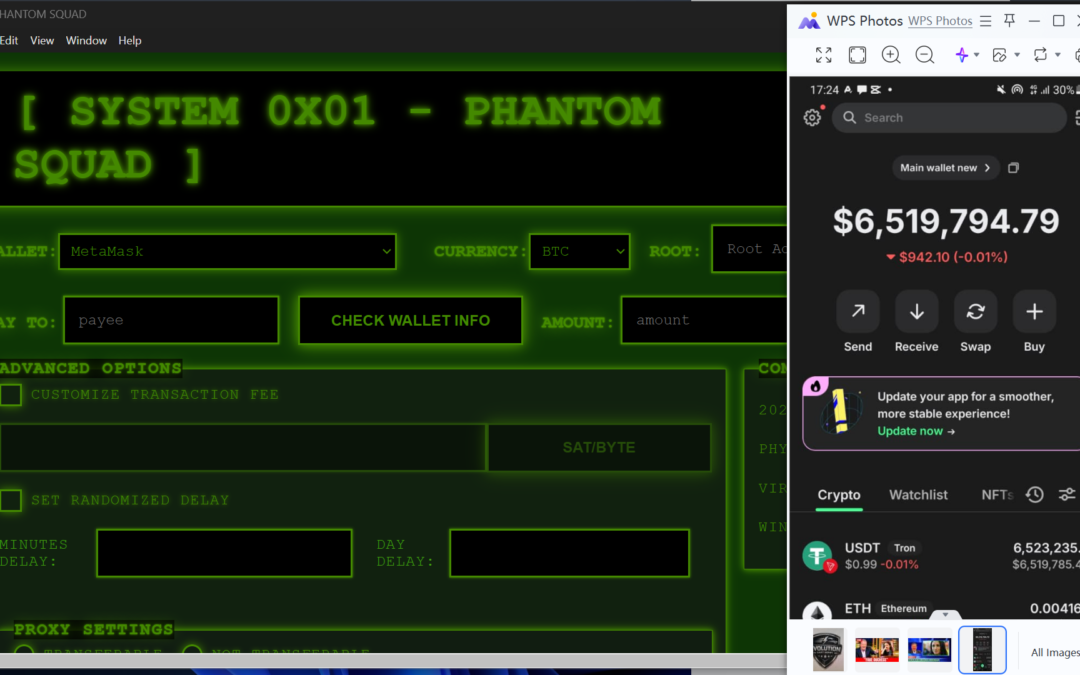
If yoIntroduction to Fake USDT Simulation Tools
The cryptocurrency ecosystem has experienced unprecedented growth, with USDT (Tether) emerging as the dominant stablecoin powering millions of daily transactions across global exchanges. As blockchain technology becomes increasingly integrated into business operations, educational programs, and development workflows, the demand for reliable testing solutions has grown substantially. This is where fake USDT simulation tools have become essential resources for developers, educators, and blockchain enthusiasts seeking legitimate testing capabilities.
Fake USDT refers to temporary, simulated USDT transactions that appear authentic on blockchain explorers for a limited period—typically 24 to 48 hours—before vanishing. It is crucial to emphasize that these are not real USDT and hold no monetary value whatsoever. These simulations are designed strictly for legitimate testing, educational demonstrations, and development purposes across multiple blockchain networks.
For developers testing wallet integrations, educators teaching cryptocurrency concepts, and content creators producing blockchain-related materials, fake USDT provides an accessible entry point to transaction testing without financial risk. Our software page offers immediate access to our simulation tools, while our how it works page explains the underlying technology. The legitimate applications of these services span multiple use cases, from application testing to educational demonstrations.
What Is Fake USDT?
Fake USDT is a simulated version of Tether's USDT stablecoin that mirrors real USDT transactions in appearance on blockchain explorers. This tool includes several key components:
Transaction Generation Engine – The tool constructs transaction objects according to the specifications of the target blockchain network. For TRC20 transactions, this involves building triggerSmartContract calls with appropriate function signatures. For ERC20 transactions, similar construction logic applies with network-specific variations.
Blockchain Broadcasting Module – The simulated transaction is submitted to the blockchain network via RPC endpoints, appearing on major explorers like Tronscan and Etherscan. This broadcasting creates the visual appearance of a real transaction.
Temporary Storage – Unlike real USDT transactions that remain permanently recorded on the blockchain, simulated transactions are temporary. They typically appear for 24 to 48 hours before being cleared from the simulation environment.
User Interface – A professional fake USDT tool provides a user-friendly interface that allows users to generate transactions without technical expertise.
Why Use Fake USDT?
There are many legitimate reasons to use fake USDT:
Test Wallet Integrations – Developers building applications that integrate with USDT wallets need to verify how their systems display incoming transactions. Fake USDT provides a safe testing environment without risking real funds. Major platforms like Binance and Coinbase demonstrate the importance of reliable wallet integrations.
Create Educational Content – Educators and trainers can use fake USDT to demonstrate crypto payments to students or audiences without spending real funds.
Develop Blockchain Applications – Developers can simulate transactions in a safe environment, testing application behavior and debugging issues without financial risk. This accelerates development cycles and improves code quality.
Produce Realistic Videos – Content creators can generate realistic USDT transaction examples for YouTube, TikTok, or training materials without spending real money.
Application Testing – Organizations testing applications that process USDT transactions can use fake USDT to validate functionality without financial investment.
Our Fake USDT Tool Features
Our fake USDT platform is trusted by developers and educators worldwide due to its comprehensive feature set:
Supports TRC20 and ERC20 – Flash fake USDT on Tron or Ethereum networks, providing comprehensive testing coverage. This multi-chain capability reflects the diverse ecosystem of real cryptocurrency operations on platforms like Kraken and KuCoin .
Realistic Blockchain Appearance – Simulated transactions are visible on major explorers including Tronscan and Etherscan, providing realistic validation of transaction mechanics.
No Download Required – Use directly from our software page without any installation or setup.
Instant Execution – Fake USDT appears on blockchain explorers within 10 to 30 seconds, providing immediate feedback and validation.
Privacy Focused – We do not log your data, ensuring that your testing activities remain confidential. Review our privacy policy for complete details.
User-Friendly Interface – Designed for users with minimal technical expertise, providing a straightforward experience.
How to Generate Fake USDT
Using our fake USDT tool is straightforward:
Step 1: Access the Platform – Visit our homepage or check our blog for updates on our simulation tools.
Step 2: Select Your Network – Choose from TRC20 (Tron) or ERC20 (Ethereum) networks.
Step 3: Enter Recipient Wallet Address – Provide the USDT wallet address where you want the simulated transaction to appear.
Step 4: Specify the Amount – Enter the amount of fake USDT you wish to simulate (e.g., 5000 USDT).
Step 5: Activate Simulation – Click "Generate Fake USDT" – our system will create the transfer automatically.
Step 6: Verify Transaction – The fake USDT will appear on the blockchain explorer and vanish after the preset time.
Understanding USDT Networks
Fake USDT helps users understand USDT networks:
TRC20 (Tron Network) – The most common network for USDT transactions, offering fast transaction speeds and low fees. TRC20 USDT is widely supported by exchanges like OKX and Bybit for deposits and withdrawals.
ERC20 (Ethereum Network) – The original USDT standard, widely supported across the ecosystem. ERC20 USDT transactions require gas fees and may take longer to confirm.
Network Selection – When using fake USDT, users must select the appropriate network for their testing scenario. TRC20 is typically preferred for fast, low-cost transfers, while ERC20 is used for Ethereum-compatible applications.
Blockchain Explorer Verification
Understanding how to verify transactions on blockchain explorers is essential:
Tronscan – The official blockchain explorer for the Tron network, used for verifying TRC20 USDT transactions. Tronscan displays transaction details including sender, recipient, amount, and status.
Etherscan – The leading blockchain explorer for Ethereum, used for verifying ERC20 USDT transactions. Etherscan provides comprehensive transaction information and contract interactions.
Verification Process – When using fake USDT, you can verify your simulated transaction by:
- Copying the transaction hash (TXID) provided
- Pasting it into the appropriate blockchain explorer
- Reviewing transaction details including status, amount, and addresses
- Confirming that the transaction appears correctly
Legal and Ethical Framework for Fake USDT
The use of fake USDT operates within a legal and ethical framework:
Legal Considerations – Using fake USDT for legitimate testing, education, and research purposes is legal. However, using simulated transactions to commit fraud, deceive others, or engage in financial crimes is illegal and carries serious consequences. Review our terms & conditions for complete legal guidelines.
Ethical Standards – The blockchain community operates on principles of transparency and integrity. Users should never misrepresent simulated transactions as real USDT.
Scam Awareness – Scammers may attempt to use fake transaction services to deceive victims. Always verify transactions on trusted explorers rather than links provided by others.
Educational Purpose – The primary legitimate purpose of fake USDT is education and testing.
Frequently Asked Questions About Fake USDT
What is fake USDT? – Fake USDT is a temporary, simulated USDT transaction that appears real on blockchain explorers for testing, education, and development.
Is fake USDT legal? – Yes, using fake USDT for legitimate testing, education, and research purposes is legal. However, using it for fraudulent activities is illegal.
Can fake USDT be converted to real USDT? – No, fake USDT is strictly simulated and cannot be converted to real USDT.
How long do simulated transactions appear on explorers? – Simulated transactions typically appear for 24–48 hours before disappearing.
What networks are supported? – Our fake USDT supports TRC20 (Tron) and ERC20 (Ethereum) networks.
Is my data secure? – Yes, we do not log your data. Review our privacy policy for complete details.
Advanced Applications of Fake USDT Tools
Building upon the foundational knowledge established in Section 1, this section delves into advanced applications and integration strategies for fake USDT tools. While Section 1 covered the basic definition, features, and implementation of fake USDT, Section 2 explores sophisticated use cases, strategic considerations, and maximizing value from USDT simulation tools.
The evolution from basic fake USDT usage to advanced application represents a significant expansion of testing and educational capabilities. Organizations and individuals that master these advanced strategies can achieve unprecedented levels of testing coverage, educational impact, and development efficiency. Whether you are a blockchain developer seeking to enhance your USDT testing capabilities, an educator looking to create engaging learning experiences, or a content creator producing professional cryptocurrency materials, the advanced techniques in this section will elevate your USDT simulation strategy.
For organizations ready to maximize their simulation capabilities, our software page provides access to all features, while our how it works page offers detailed technical documentation.
Advanced Educational Applications
Fake USDT tools offer powerful educational applications beyond basic demonstrations:
Interactive Classroom Exercises – Educators can create interactive exercises where students verify simulated USDT transactions on blockchain explorers, learning about transaction mechanics, verification processes, and network-specific features. This hands-on approach enhances understanding of USDT fundamentals. Platforms like Binance and Coinbase demonstrate the importance of understanding USDT transaction mechanics.
Curriculum Integration – Fake USDT tools can be integrated into blockchain curricula, providing students with practical experience without requiring real USDT. Our blog provides educational resources and case studies to support curriculum development.
Comparative Network Analysis – Students can use fake USDT to compare transaction mechanics across different networks, understanding how TRC20 differs from ERC20 in terms of speed, fees, and confirmation processes.
Workshop Demonstrations – Educators can conduct live workshop demonstrations showing how USDT transactions work on different networks, using simulated transactions to illustrate key concepts.
Assessment Tools – Instructors can create assessment activities where students must verify simulated USDT transactions, explain network mechanics, and demonstrate understanding of transaction flows.
Professional Development Applications
Fake USDT tools serve valuable professional development purposes:
Employee Training – Organizations can use fake USDT to train employees on USDT transactions, wallet management, and blockchain explorer navigation without financial risk.
Certification Preparation – Professionals preparing for blockchain certifications can use simulated transactions to practice verification techniques and understand USDT transaction mechanics.
Skill Building – Developers can build skills in transaction construction, network integration, and wallet management using fake USDT as a safe testing environment.
Team Workshops – Teams can conduct workshops on USDT and stablecoin technology, using simulated transactions to illustrate concepts and build shared understanding.
Content Creation Applications
Content creators benefit significantly from fake USDT tools:
Video Tutorials – Content creators can generate realistic USDT transaction examples for video tutorials, demonstrating how USDT transfers appear on blockchain explorers. This creates professional, authentic-looking content. Platforms like Kraken and KuCoin serve as real-world examples for content creators.
Screenshots and Visuals – Generate screenshots of simulated USDT transactions for use in presentations, articles, and educational materials. These visuals enhance content quality and credibility.
Case Studies – Create detailed case studies showing USDT transaction flows, verification processes, and network differences using simulated transactions.
Demo Accounts – Build demo applications or sandbox environments for users to interact with simulated USDT transactions, providing hands-on learning experiences.
Marketing Content – Create marketing content that demonstrates application functionality with realistic USDT transaction examples, building trust with potential users.
Software Testing Applications
Fake USDT tools are invaluable for software testing across multiple dimensions:
Integration Testing – Test how applications integrate with blockchain networks and display USDT transactions. Simulated transactions enable comprehensive integration testing without financial risk.
Network-Specific Testing – Test applications' handling of network-specific features including TRC20's energy and bandwidth mechanics and ERC20's gas fee structures.
User Interface Testing – Verify that user interfaces correctly display USDT transaction details, status updates, and verification information across different blockchain networks.
Error Handling Testing – Test error handling and edge case scenarios by generating various USDT transaction patterns and verifying application responses.
Performance Testing – Assess how applications handle USDT transaction verification and processing under various conditions.
Developer Integration Strategies
Developers can integrate fake USDT tools into their development workflows:
Local Development – Use simulated USDT transactions in local development environments to test transaction processing without requiring real USDT.
Continuous Integration – Integrate fake USDT tools into CI/CD pipelines for automated testing of USDT-related functionality.
Test Automation – Automate USDT transaction simulations for regression testing, ensuring that code changes don't break transaction handling features.
API Integration – Leverage API capabilities for programmatic USDT transaction generation in automated testing scenarios. Major exchanges like OKX and Bybit demonstrate the value of API integration.
Debugging – Use simulated USDT transactions to reproduce and debug transaction-related issues in controlled environments.
Understanding Network-Specific Mechanics
Fake USDT helps users understand network-specific mechanics:
TRC20 Energy and Bandwidth – Simulated TRC20 USDT transactions help users understand Tron's resource model, including energy and bandwidth requirements for smart contract interactions.
ERC20 Gas Fees – Simulated ERC20 USDT transactions help users understand Ethereum's gas fee structure, including base fees, priority fees, and gas limits.
Address Formats – Users can practice working with different address formats including Tron (T) and Ethereum (0x) addresses.
Confirmation Times – Users can observe how transaction confirmation times differ between networks, understanding the practical implications of network selection.
Quality Assurance with Fake USDT Tools
Fake USDT tools are invaluable for quality assurance across multiple dimensions:
Regression Testing – Quality assurance teams can use fake USDT to validate that existing USDT transaction processing functionality remains intact after code changes.
User Acceptance Testing – UAT teams can use fake USDT to validate that applications handle USDT transactions correctly from a user perspective.
Integration Testing – QA teams can verify that different system components work together correctly when processing USDT transactions.
Security Testing – Security teams can use fake USDT to identify vulnerabilities in transaction processing systems. Simulated transactions enable testing of security measures without financial risk.
Legal and Ethical Considerations for USDT Simulation
The use of fake USDT tools operates within a legal and ethical framework:
Scam Awareness – It is crucial to note that scammers may attempt to use fake transaction services to deceive victims. Always verify transactions on trusted explorers rather than links provided by others.
Responsible Use – Users should never use fake USDT to deceive or defraud anyone. The educational and testing purposes are the only legitimate uses.
Transparent Communication – Always clearly communicate that simulated transactions are for testing purposes only and have no monetary value.
Future Developments in Fake USDT Tools
The evolution of fake USDT tools continues with several emerging trends:
Enhanced Realism – Future tools will offer increasingly realistic simulations that more closely mimic genuine USDT blockchain interactions.
More Networks – Support for additional blockchain networks will expand the utility of fake USDT services.
Educational Features – Enhanced educational features will provide guided learning experiences for USDT education.
Integration Capabilities – Improved integration capabilities will enable easier incorporation into development workflows.
Batch Processing – Enhanced batch processing capabilities will enable more comprehensive testing scenarios.
Frequently Asked Questions About Advanced Fake USDT
Can I use fake USDT for enterprise testing? – Yes, fake USDT is suitable for enterprise testing and educational purposes across TRC20 and ERC20 networks.
What networks does fake USDT support? – Our fake USDT supports TRC20 (Tron) and ERC20 (Ethereum) networks.
Can I integrate fake USDT with my applications? – Basic integration is possible through manual processes. For API integration, consider our enterprise solutions.
Is there a time limit on usage? – Our service is available for legitimate educational, testing, and development purposes without time limits.
How do I report issues with the service? – Visit our contact page to report issues or provide feedback.
What support options are available? – We provide responsive support through our contact page. Enterprise users receive priority support.
Conclusion: Maximizing Value with Fake USDT Tools
Fake USDT represents a transformative opportunity for USDT education, testing, and development. As demonstrated across both Sections 1 and 2, these tools enable users to achieve unprecedented levels of learning, testing efficiency, and professional development.
Section 1 established the foundational understanding of fake USDT, covering what it is, why to use it, features, implementation, and legal considerations. This foundation enables users to access simulation capabilities quickly and effectively.
Section 2 has extended this foundation with advanced applications, integration strategies, and maximizing value. These advanced techniques enable users to leverage fake USDT for professional development, content creation, and software testing across TRC20 and ERC20 networks.
Whether you are an educator teaching USDT concepts, a developer testing applications, a content creator producing professional materials, or a professional building blockchain skills, fake USDT provides the capabilities you need. Our software page offers immediate access to our tools, while our blog provides ongoing updates and educational resources.
Remember that the ultimate goal of fake USDT is to support legitimate testing, education, and development. By using these services responsibly and ethically, you contribute to a healthier, more innovative blockchain ecosystem. For more information about our platform, visit our about us page, review our terms & conditions , or reach out through our contact page for custom requirements.